
The Parade Grounds
All Airco aircraft currently available from Tabletop Flights are 20% off while the Airco family occupies The Parade Grounds.
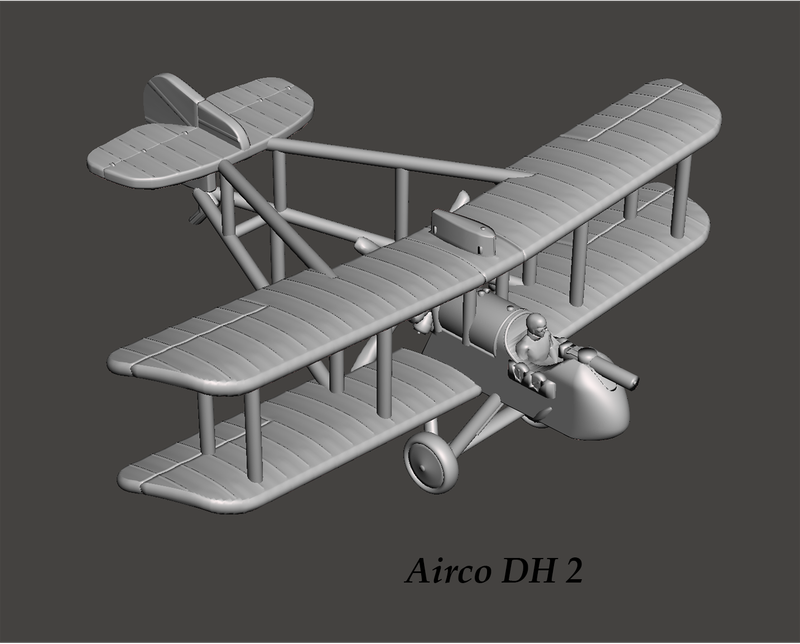
Airco DH.2
Introduced in 1916, the Airco DH.2 was a single-seat pusher fighter designed by Geoffrey de Havilland. With its engine and propeller mounted behind the pilot, the DH.2 allowed an unobstructed forward-firing machine gun before reliable synchronization gear was available to the British. It played an important role in helping the Royal Flying Corps challenge the German Fokker monoplanes and bring the period known as the “Fokker Scourge” to an end.
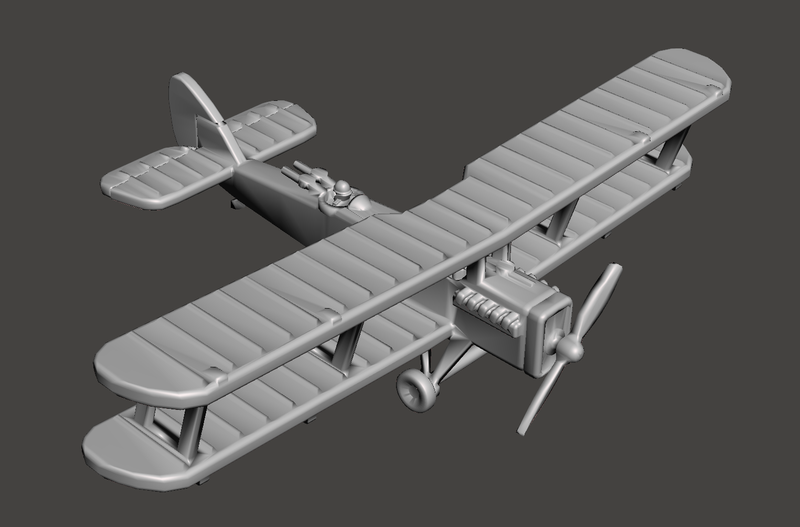
Airco DH.4
Introduced in 1917, the Airco DH.4 was a fast and versatile two-seat aircraft designed by Geoffrey de Havilland. Used primarily for daylight bombing and reconnaissance, its speed and performance allowed it to operate deep behind enemy lines while still being capable of defending itself against fighters. The DH.4 served extensively with British and American forces and was produced with several different engines and configurations, becoming one of the most successful and widely used Allied aircraft designs of the First World War.
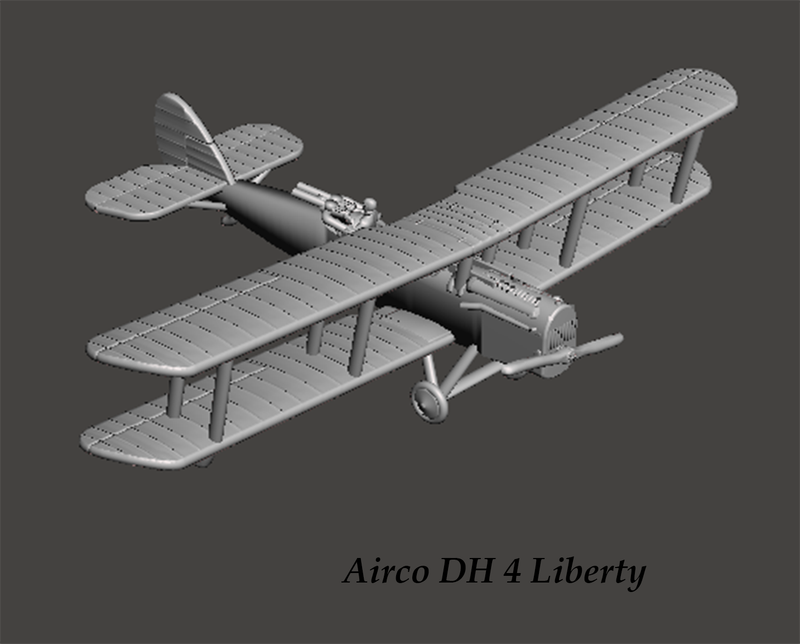
Airco DH.4 Liberty
The American-built DH.4 paired Geoffrey de Havilland's proven design with the powerful American Liberty L-12 engine. Produced in large numbers in the United States, it became the only American-built aircraft to see combat with U.S. forces in France during the First World War. Used for bombing, reconnaissance, and observation, the Liberty-powered DH.4 remained in American service long after the Armistice and became an important foundation for U.S. military aviation in the postwar years.
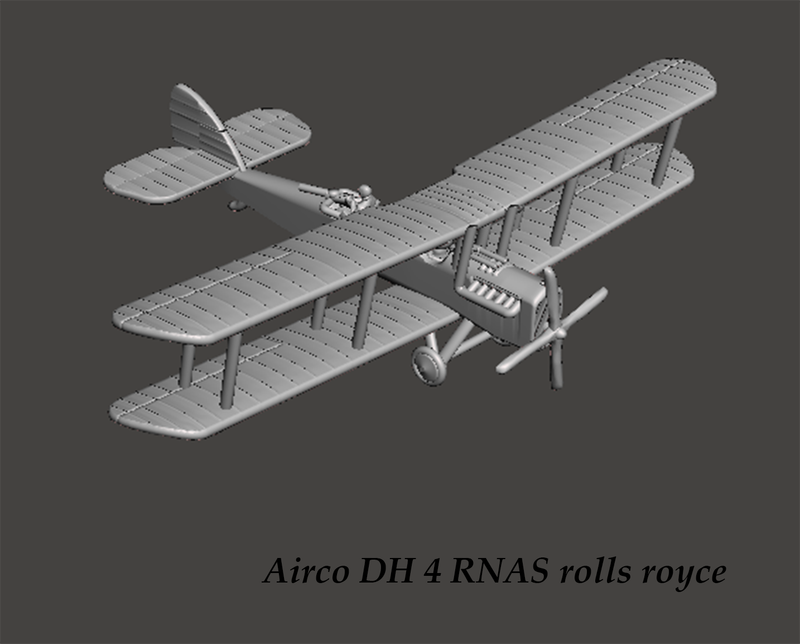
Airco DH.4 Rolls-Royce and Rolls-Royce RNAS
Powered by the Rolls-Royce Eagle engine, the DH.4 combined excellent speed, range, and altitude performance with the versatility needed for bombing and reconnaissance missions. The Eagle-powered aircraft became one of the best-known British versions of the DH.4 and served extensively on the Western Front. Its performance made the DH.4 difficult for enemy fighters to intercept and helped establish the design as one of the outstanding two-seat aircraft of the First World War. The Royal Naval Air Service operated Rolls-Royce Eagle-powered DH.4s on long-range bombing, reconnaissance, and anti-submarine patrols. Their speed, range, and useful bomb load made them particularly valuable for operations against German naval facilities and other targets along the Belgian coast. RNAS service demonstrated the versatility of the DH.4 beyond the Western Front battlefield and helped establish it as an effective naval as well as land-based aircraft.
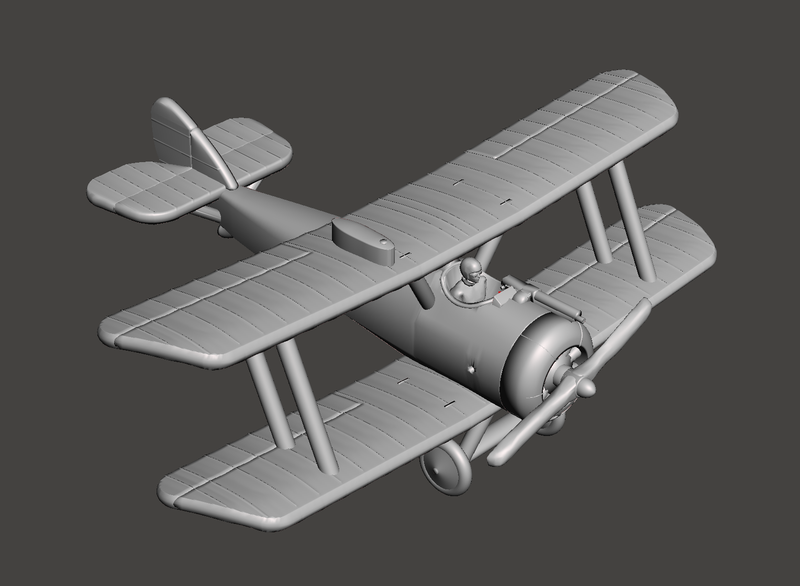
Airco DH.5
Introduced in 1917, the Airco DH.5 was an unusual single-seat fighter designed by Geoffrey de Havilland. Its distinctive backward-staggered wings were intended to improve the pilot’s forward and upward view while retaining a conventional tractor engine and propeller. Although its performance was soon surpassed by newer fighters, the DH.5 proved useful in the ground-attack role, providing low-level support to British and Australian troops during some of the hardest fighting of 1917.
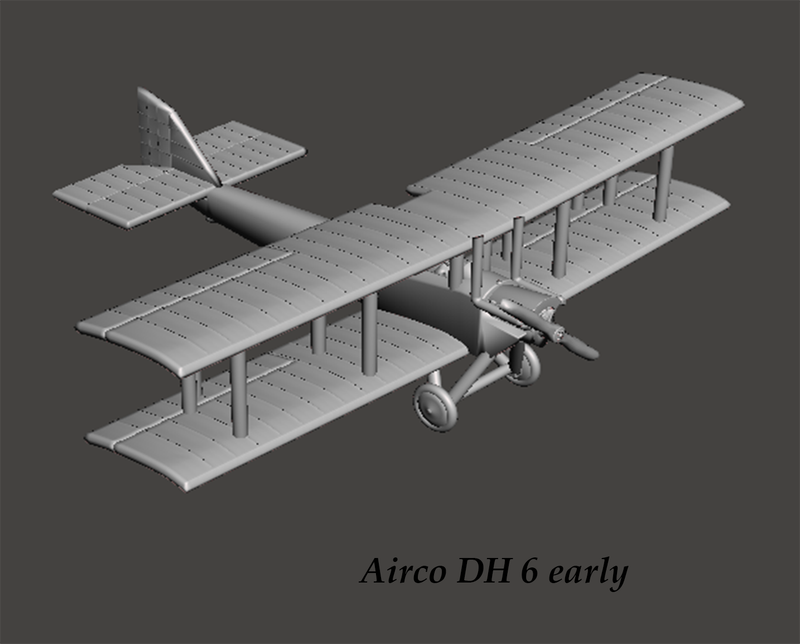
Airco DH.6 Early and Late
Introduced in 1917, the Airco DH.6 was designed by Geoffrey de Havilland as a simple, forgiving trainer for pilots entering the rapidly expanding Royal Flying Corps. The early DH.6 featured the distinctive angular lines and straightforward construction that earned it the nickname “Clutching Hand.” Stability and ease of handling were valued over performance, making the aircraft well suited to the demanding task of preparing new pilots for operational service. Later DH.6s incorporated production changes intended to simplify construction and meet the enormous demand for training aircraft. As newer trainers became available, many DH.6s found additional work away from flying schools, particularly on coastal patrol and anti-submarine duties. Slow but dependable, the DH.6 remained useful throughout the war and continued serving in military and civilian roles after the Armistice.
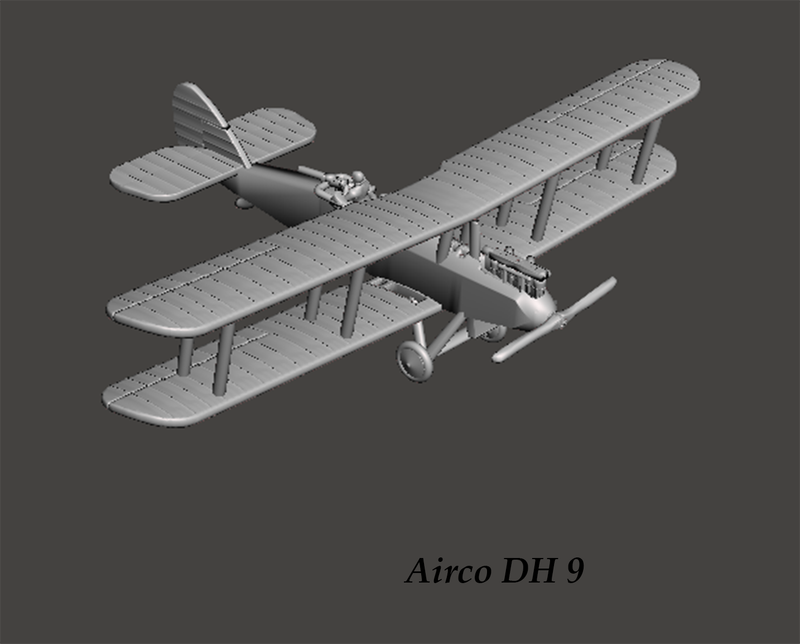
Airco DH.9
Introduced in 1918, the Airco DH.9 was developed from the successful DH.4 as a two-seat day bomber and reconnaissance aircraft. Although intended as an improvement, its Siddeley Puma engine failed to deliver the expected performance, leaving the DH.9 slower and more vulnerable than its predecessor. Despite these shortcomings, large numbers served on the Western Front and in other theaters, making the DH.9 an important Allied aircraft and leading directly to the much more successful Liberty-powered DH.9A.
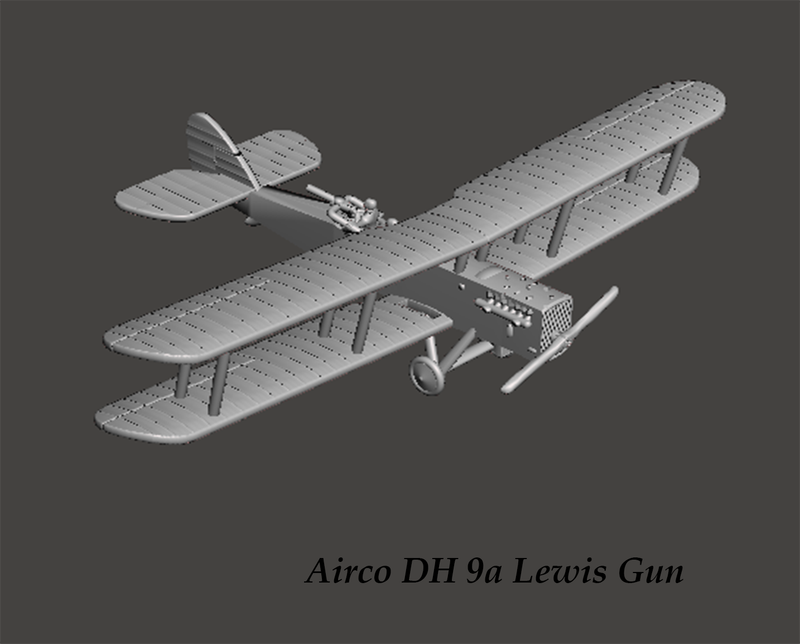
Airco DH.9a One Lewis Gun and Twin Lewis Guns
The Airco DH.9A was developed to overcome the disappointing performance of the earlier DH.9 by combining an improved airframe with the powerful American Liberty engine. Entering service in 1918, the “Ninak” proved to be a capable day bomber with improved speed, range, and reliability. This version carries the observer’s single flexible Lewis gun, providing rear defense while the aircraft carried out bombing and reconnaissance missions over enemy territory. As the threat from enemy fighters increased, some DH.9As carried a twin Lewis gun mounting for the observer, greatly increasing their defensive firepower. The powerful Liberty engine and improved performance made the “Ninak” one of Britain’s most capable late-war day bombers. Although it arrived too late to have a major impact on the First World War, the DH.9A enjoyed a long postwar career with the Royal Air Force, particularly in operations across the Middle East.